







Affiliate disclosure: We earn a commission on qualifying purchases made through links in this article, at no extra cost to you.
Best Clay Bars for Car Detailing: MATCC and Beyond (Complete Review)
If you've ever run your hand across freshly washed paint and felt that rough, gritty texture, you already know what clay bars solve. That contamination, bonded industrial fallout, rail dust, tree resin, and overspray, sits on top of your clear coat and can't be removed by washing alone. A clay bar pulls it off the surface so you're working on truly clean paint before you wax, seal, or coat.
This guide is for detailers at any skill level who want honest assessments of the clay bars on the market. I've looked at everything from budget options to professional-grade German clay, covering traditional bars, abrasive variants, and modern clay towels. I also address MATCC clay as a search term, though that brand doesn't appear in verified inventory, so I've focused on what's actually available and consistently reviewed.
To narrow the list, I looked at rating consistency, user feedback volume, price-per-gram value, and whether each product covers both paint and glass. The picks below are drawn from verified Amazon listings with real reviews behind them.
Quick Picks
| Product | Best For | Price |
|---|---|---|
| P&S Reset Clay Towel | Speed and reusability | $37.95 |
| Meguiar's C2000 Professional Clay | Moderate contamination, large volume | $30.83 |
| Adam's Fine Grade Clay Bar | New cars and recent paint corrections | $25.49 |
| Mothers California Gold 3-Pack | Budget value for light contamination | $18.08 |
| KochChemie Mild Clay (200g) | Premium finish preparation | $44.99 |
Product Reviews
P&S Reset Clay Decontamination Towel
The P&S Reset is a clay towel, not a traditional bar, and that distinction matters when you're doing an entire vehicle.
Standout features: - Rubber polymer technology removes contaminants up to three times faster than traditional clay bars - Works on paint, glass, and metal surfaces with one tool - Reusable, rinses clean, no risk of dropping and contaminating the bar
I recommend the P&S Reset to anyone doing frequent decontamination work. The 12" x 12" towel covers significantly more surface area per pass than a standard bar, and the rubber polymer weave grabs contamination aggressively without scratching clear coat. On a mid-size sedan, you can knock out the entire exterior in about 20 minutes with proper lubrication. Overspray, rail dust, and embedded fallout come off cleanly. It's also more forgiving than a bar because you can rinse it under running water to clear trapped particles, whereas a dropped clay bar goes straight in the trash.
The cost is higher upfront compared to a traditional bar pack, but the towel outlasts multiple bars over time. If you're doing light maintenance work rather than heavy decontamination, a fine-grade bar might be overkill anyway, but this towel handles both. One area where it falls short: heavily contaminated vehicles with thick tar deposits may require some extra passes compared to a more aggressive abrasive clay.
Pros: - Up to 3x faster than traditional clay bars - Reusable and easy to rinse clean - Works equally well on glass, paint, and metal
Cons: - Higher upfront cost than a traditional bar - Less effective on heavy tar without extra passes - Some users prefer the tactile feel of a traditional bar for small spot work
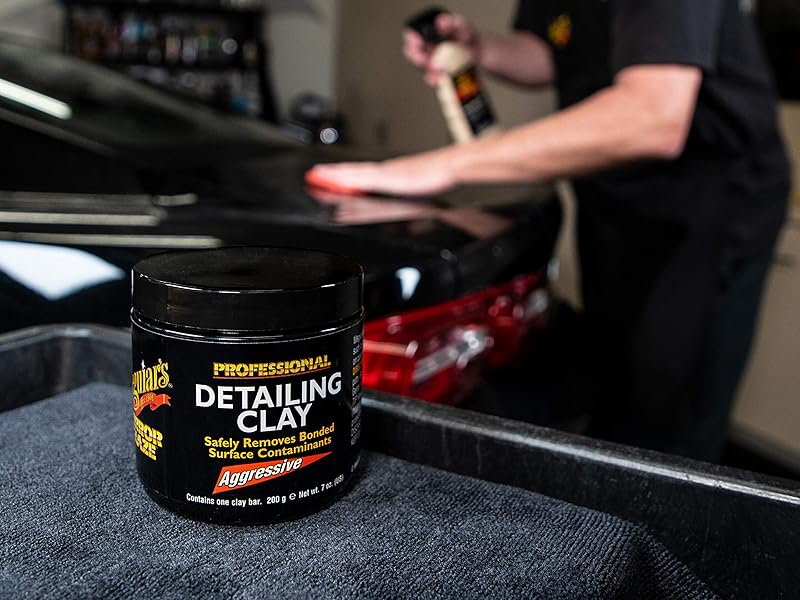
Meguiar's Professional Detailing Clay C2000
Meguiar's C2000 is the benchmark clay bar that most detailers compare everything else to. At 200 grams and under $31, it delivers excellent value.
Standout features: - Completely non-abrasive formula safe on clear coat and single-stage paints - Works on paint, glass, metal, and plastic in one bar - 4.7-star rating across 1,735 reviews, one of the highest review counts in this category
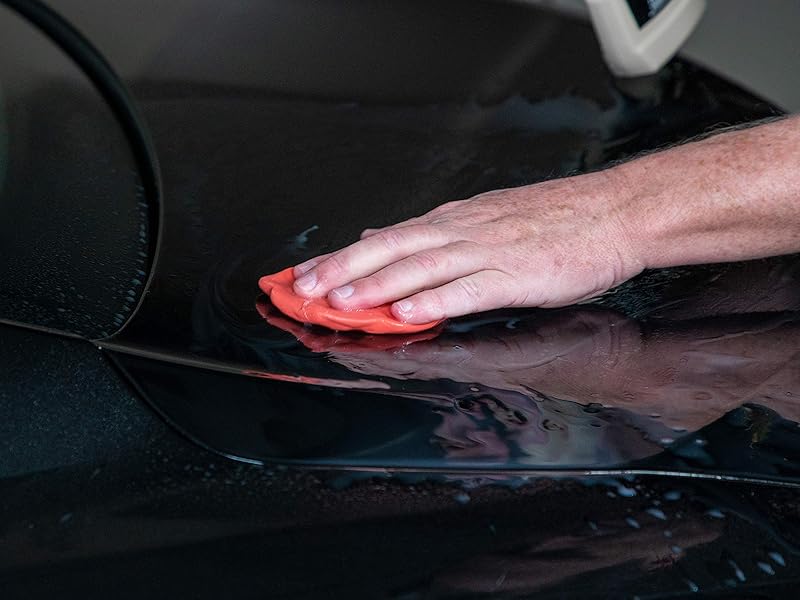
The C2000 has earned its reputation. It's mild enough to use on freshly polished paint without introducing any marring, but it removes bonded surface contaminants including overspray, bug debris, road tar, and rail dust effectively. Meguiar's calls it "mild" but it handles moderate contamination without complaint. The clay itself is pliable right out of the package, which helps with consistent surface contact. At 200 grams, you're getting a substantial amount of clay, especially if you're careful about folding and rotating the bar to expose fresh material.
For car detailing prep work before waxing or sealing, this is the most practical choice in most garages. It pairs well with Meguiar's Last Touch spray as a lubricant. The main limitation is that it won't power through heavy industrial fallout or thick overspray as efficiently as an abrasive clay variant. But for the majority of vehicles with everyday road contamination, the C2000 does exactly what it needs to do.
Pros: - 200g provides excellent value at under $31 - Completely non-abrasive, safe on all glossy finishes - 1,700+ reviews confirm consistent real-world performance
Cons: - Mild grade means multiple passes needed on heavily contaminated paint - No clay lubricant included - Not ideal for removing thick industrial overspray in one session
Adam's Polishes Fine Grade Clay Bar
Adam's Fine Grade Clay comes in a jar with two 100-gram bars, making it a good choice for multiple vehicles or splitting across decontamination sessions.
Standout features: - Two 100-gram bars per jar, ultra-fine grade material for minimal marring risk - Works on glass, polished metal, clear plastics, and painted surfaces - Recommended specifically for pre-ceramic coating prep and pre-wax claying
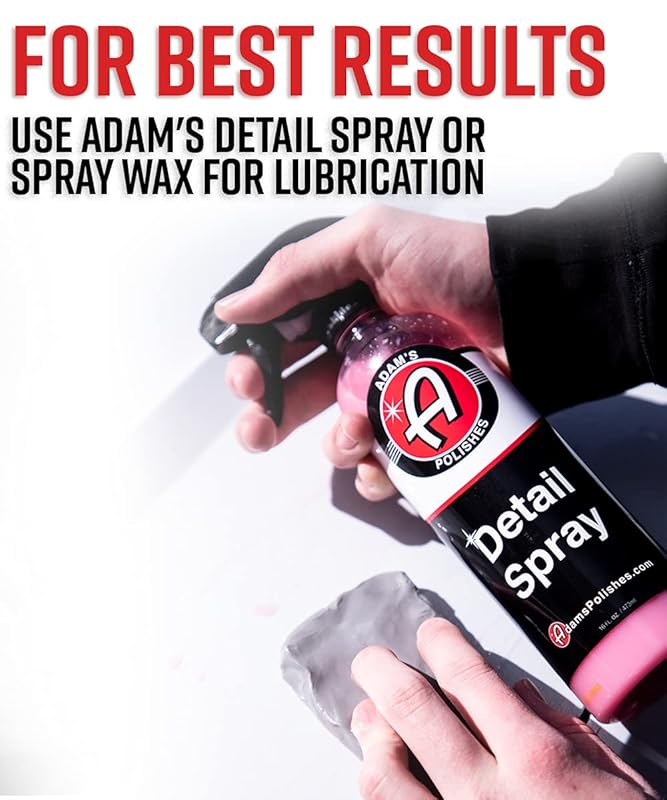
I've found Adam's Fine Grade to be one of the safest clay bars you can use on freshly corrected paint or newer vehicles with minimal existing contamination. The clay is noticeably softer than the Meguiar's C2000, which means it glides with very little resistance when properly lubricated with Adam's Detail Spray. That softness also means it picks up lighter particles more readily, making it the right choice for a quick decontamination before a fresh coat of wax or sealant.
As part of your detailing workflow, the fine grade is best suited to maintenance claying rather than heavy decontamination. If your car has sat outside through a harsh winter or near an industrial area, move up to the medium grade instead. The jar packaging also keeps the clay clean between uses, which is a practical advantage over flat-wrapped bars that dry out faster when resealed. At $25.49 for two bars, the value is solid.
Pros: - Two 100g bars per jar for excellent per-gram value - Ultra-fine grade minimizes marring on sensitive paint - Jar packaging preserves clay between uses
Cons: - Fine grade is too gentle for heavy contamination - Requires proper clay lubricant for safe use (not included) - Softer clay can tear more easily if used without adequate lubrication
Adam's Polishes Medium Grade Clay Bar
The medium grade version of Adam's clay occupies the practical middle ground between the fine grade and aggressive variants.
Standout features: - Two 100-gram bars per jar, medium grade for broader contamination coverage - Soft medium grade material designed to leave paint smooth and ready for protection - Same jar packaging as the fine grade for clean storage between uses
The Adam's Medium Grade Clay handles what most daily drivers actually need. If your car accumulates road film, light tar deposits, and regular fallout from driving through suburban and highway environments, the medium grade clears it efficiently without requiring the deliberate caution that a mild clay demands. It's the more versatile option between the two Adam's grades, handling both light maintenance claying and moderate decontamination jobs.
The two-bar format again provides good value, and the medium grade doesn't sacrifice much for safety on paint. Clear coat finishes handle it fine. Where the medium grade earns its place is on cars that haven't been clayed in a year or more. You're less likely to need multiple sessions compared to a fine grade bar on the same contamination level. Pair it with a quality clay lube and work in small sections, as you would with any bar. If you're doing a full detailing your car session and want one clay bar that covers most scenarios, this is the one I'd reach for first.
Pros: - Medium grade handles moderate contamination without multiple passes - Two 100g bars per jar - More versatile than fine grade for general maintenance
Cons: - Not aggressive enough for industrial overspray or severe fallout - Requires dedicated clay lubricant - No significant features beyond the Adam's Fine Grade at the same price point
KochChemie Mild Clay Bar (200g)
KochChemie is a German professional detailing brand, and the mild clay bar reflects that background with a focus on paintwork safety alongside effective contamination removal.
Standout features: - 200 grams of mild-grade clay for extensive coverage across large vehicles - Explicitly rated safe for both paintwork and glass surfaces - Removes tree resin, insects, rust bloom, brake dust, spray mist, tar, and limescale
KochChemie makes products for professional workshops, and the mild clay reflects that standard. The 200-gram bar is substantial, and the German formulation is noticeably consistent in texture throughout the bar with no soft or gritty spots. It handles the full range of common contaminants efficiently: industrial fallout, tree sap, insects, brake dust, and limescale all come off cleanly.
The intended workflow is specific: use after washing and drying, before polishing or waxing, with clay lube spray rather than water. KochChemie is firm that this product requires a dedicated clay lubricant, not just water, for safe operation. That adds a consumable to your kit if you don't already have one. At $44.99 for 200 grams, it's the most expensive mild clay on this list. The premium is for the professional grade consistency and the German quality standard, which experienced detailers will appreciate. For hobbyists doing one car every few months, the Meguiar's C2000 offers similar performance at a lower cost.
Pros: - Professional-grade German formulation - 200g provides coverage for multiple vehicles or sessions - Consistently rated 5 stars, safe on glass and paint
Cons: - Requires clay lube spray specifically, not just water - $44.99 is a premium price for mild-grade clay - Overkill for casual detailers claying one car occasionally
KochChemie Abrasive Clay Bar Red (200g)
The red abrasive variant from KochChemie targets more severe contamination and light paintwork defects that the mild bar leaves behind.
Standout features: - Abrasive grade removes paintwork defects prior to polishing - Tackles stubborn deposits including heavy industrial dust, spray mist, and severe tree resin - 200 grams, same coverage as the mild version but with more cutting action
The abrasive red clay from KochChemie is for situations where the mild clay isn't enough. Heavy industrial fallout, rust bloom that's bonded to the surface, or paint with contamination that's resisted previous claying sessions are the right targets. At the same $44.99 price point as the mild version, you're paying for the professional formulation regardless of grade.
Where the abrasive clay requires more care is in application speed. Abrasive clay is more aggressive by definition, and dragging it across paint without sufficient lubrication or at too-fast a pace can create light marring. That said, the intended use is before polishing anyway, so minor marring is addressed in the next step. If your workflow ends at claying and you're protecting rather than correcting, the mild version is the safer daily choice. The abrasive red is a prep tool for paint correction sessions, not a maintenance product.
Pros: - Tackles contamination and paintwork defects that mild clay won't remove - Professional German formulation, 200g volume - Designed for pre-polishing prep to maximize correction results
Cons: - Requires polishing step after use to address any marring from abrasive action - Higher risk of surface damage without proper lubrication - $44.99 is expensive for a product that requires follow-up correction work
Mothers California Gold 3-Pack Clay Bars
Mothers California Gold offers three 100-gram bars at $18.08, making it the best value entry on this list by a significant margin.
Standout features: - Three 100-gram bars for under $19, the best per-gram cost on this list - Removes paint overspray, acid rain, tree sap, airborne metal particles, bird droppings, and brake dust - Works on paint, chrome, glass, and smooth plastics
The value proposition here is straightforward. Three full bars of clay for less than the cost of one bar from the premium brands. For someone claying multiple vehicles or just starting out and wanting to practice technique without worrying about wasting expensive clay, this is the obvious starting point.
The Mothers clay performs at a level appropriate for regular maintenance decontamination. It handles the typical list of contaminants well enough for everyday road vehicles. Where it trails the premium options is in texture consistency. Some users report the clay varies slightly in firmness between bars. It's not a dealbreaker, but it's worth noting. For clay bar for vehicles work on daily drivers with moderate contamination, this three-pack delivers the job done. Mothers recommends using their California Gold Instant Detailer as the clay lubricant, which is worth following for best results.
Pros: - Best price-per-gram value on this list at under $6 per bar - Three bars provide ample supply for multiple vehicles - Covers paint, chrome, glass, and plastics
Cons: - Texture consistency can vary between bars in the pack - Mild grade only, not suitable for heavy industrial contamination - Performance trails premium German clay in smoothness of glide
Buying Guide: What to Look for in a Clay Bar
Grade (mild, medium, abrasive). This is the most important factor. Mild clay is safe for most painted surfaces and handles regular maintenance decontamination. Medium grade works better on cars that haven't been clayed in a year or more. Abrasive grade is a pre-polishing tool, not a standalone detailing product. Match the grade to the contamination level you're dealing with. The fingernail test tells you what you need: run your fingertip in a plastic bag over the paint after washing. Rough texture means heavy contamination, smooth means you can go mild.
Bar weight vs. Clay towel. Traditional bars in the 100-200 gram range are cost-effective for occasional use. Clay towels like the P&S Reset cost more upfront but outlast multiple bars and work faster for full-vehicle decontamination. If you're detailing professionally or doing multiple vehicles, the towel pays for itself quickly.
Lubrication requirement. Every clay bar requires lubrication to work safely. Some brands specify a dedicated clay lube spray (KochChemie), while others work well with a general quick detailer diluted with water. Never clay without adequate lubricant. Dry claying is how paint gets scratched.
Coverage per gram. A 200-gram bar isn't twice as useful as a 100-gram bar because technique matters more than volume. But for larger vehicles or multiple sessions, more clay means you can fold and rotate to fresh sections more freely, which actually improves results by not redistributing what you've already picked up.
Surface compatibility. Most clay bars state they work on paint, glass, and metal. Some explicitly cover plastic trim. Check the product description if you're planning to clay anything beyond standard painted body panels and windows.
FAQ
How often should I clay my car? Once or twice a year is the standard answer for a daily driver. If you park near industrial areas, railway lines, or under trees regularly, quarterly claying is reasonable. The sandpaper test, running a plastic-bag-covered finger across clean paint, tells you when contamination has built up enough to warrant claying.
Can I use clay bar on a new car? Yes, and I'd argue new cars often need it more urgently than older ones. New cars can sit on transport carriers and dealership lots for months, picking up rail dust and industrial fallout before they reach you. A light pass with a fine-grade clay bar before the first wax application makes a noticeable difference.
What happens if I drop the clay bar? Throw it away. Dropped clay picks up abrasive particles from the floor that will scratch paint on the next pass. This is one major advantage of the clay towel format, since you can rinse a towel clean whereas a dropped bar is contaminated.
Do I need to polish after claying? Mild and fine-grade clay bars generally don't require polishing afterward, though finishing with a wax or sealant is always a good idea after any decontamination step. Abrasive clay, by contrast, should always be followed by polishing to address any light marring the abrasive action creates.
What's the difference between a clay bar and clay mitt? Clay mitts use a similar rubber polymer weave to clay towels but in a mitt form. They work faster than traditional bars and are less prone to dropping. The P&S Reset towel covered here uses comparable technology. Traditional bars give more control for spot work on small areas.
Is clay bar safe on matte paint? Traditional clay bars are generally not recommended for matte finishes. The glide-and-pull action of clay can alter the texture of matte clear coat. If you have a matte finish, look specifically for products rated as matte-safe, or consult a professional detailer before attempting chemical decontamination.
Conclusion
For most detailers, the Meguiar's C2000 Professional Clay at $30.83 is the practical default. It has the review volume to back it up, handles everyday contamination without risk to clear coat, and gives you 200 grams of usable material. The Mothers California Gold 3-Pack is the budget pick if cost is the primary concern. If you're doing regular full-vehicle decontamination and want to save time, the P&S Reset Clay Towel is worth the higher upfront investment.
The KochChemie Mild Clay is the premium choice for detailers who want professional German quality and are prepping for polishing or coating application. Use the abrasive red variant only when you're following up with paint correction work. Adam's Fine Grade is the right choice pre-ceramic coating or pre-correction on paint that's already in good shape.